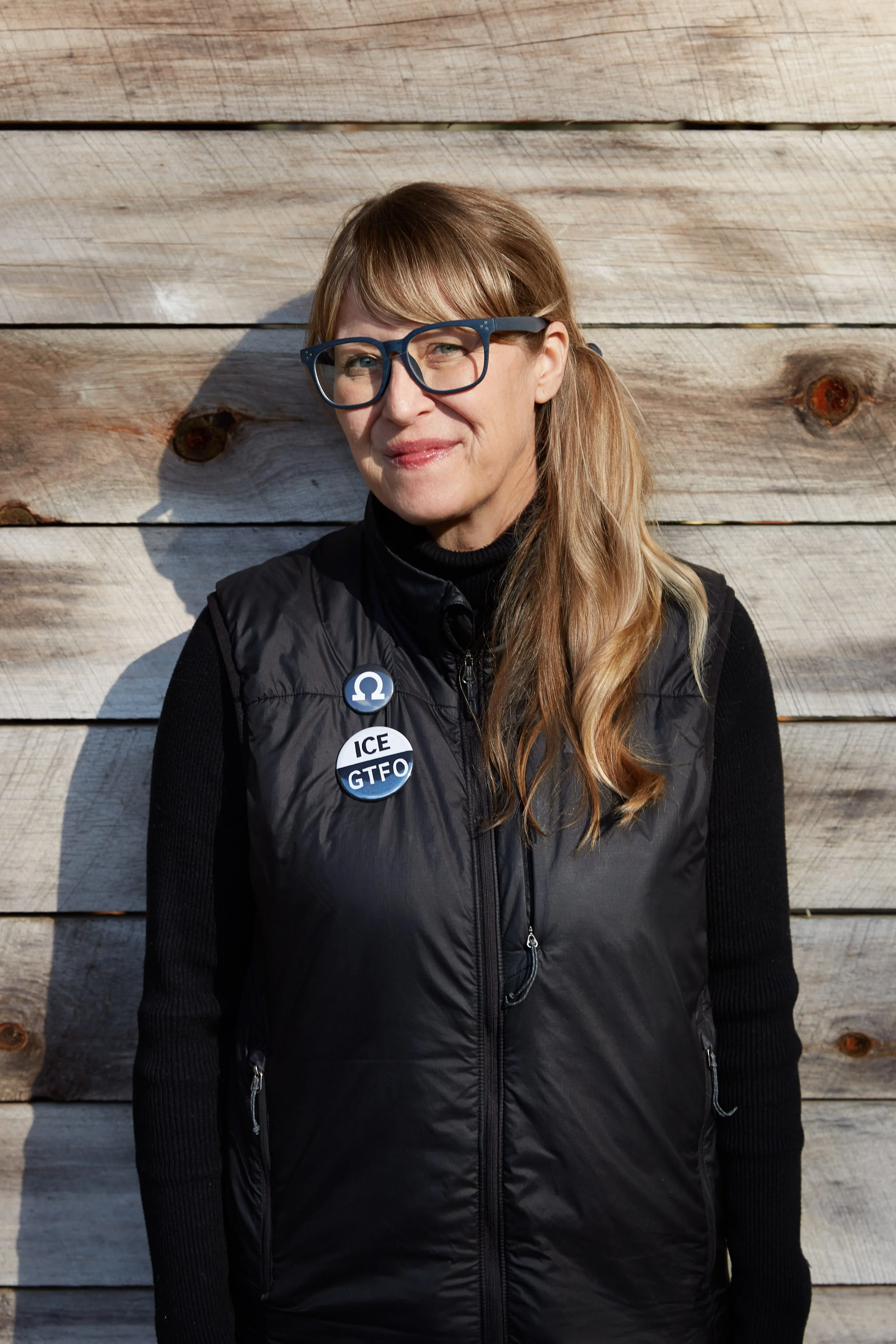
SAMANTHA FIELDS
On Painting Atmosphere with Atmosphere
Exhibition: The Lay of the Land, Sept. 12 - Oct. 10, 2026
Get to know Sam in Five Questions
What did you want to be when you were a kid?
SF: Believe it or not, I wanted to be a painter!
Coffee or tea?
SF: Coffeeeeeeeeeeee! When I wake up I immediately start thinking about how much I'm going to enjoy that first sip.
Favorite snack?
SF: During the day, Cosmic Crisp apples with extra crunchy peanut butter. In the evening, MANGO. When it's in season it's all I want!
What do you do to relax?
SF: I read in my hammock.
What do you have hanging on your walls at home?
SF: My husband, artist Andre Yi and I, have a collection of artwork from our friends. I just looked up and I can see Siobhan McClure, Eve Wood, Thomas Müller, and Noah Simblist.
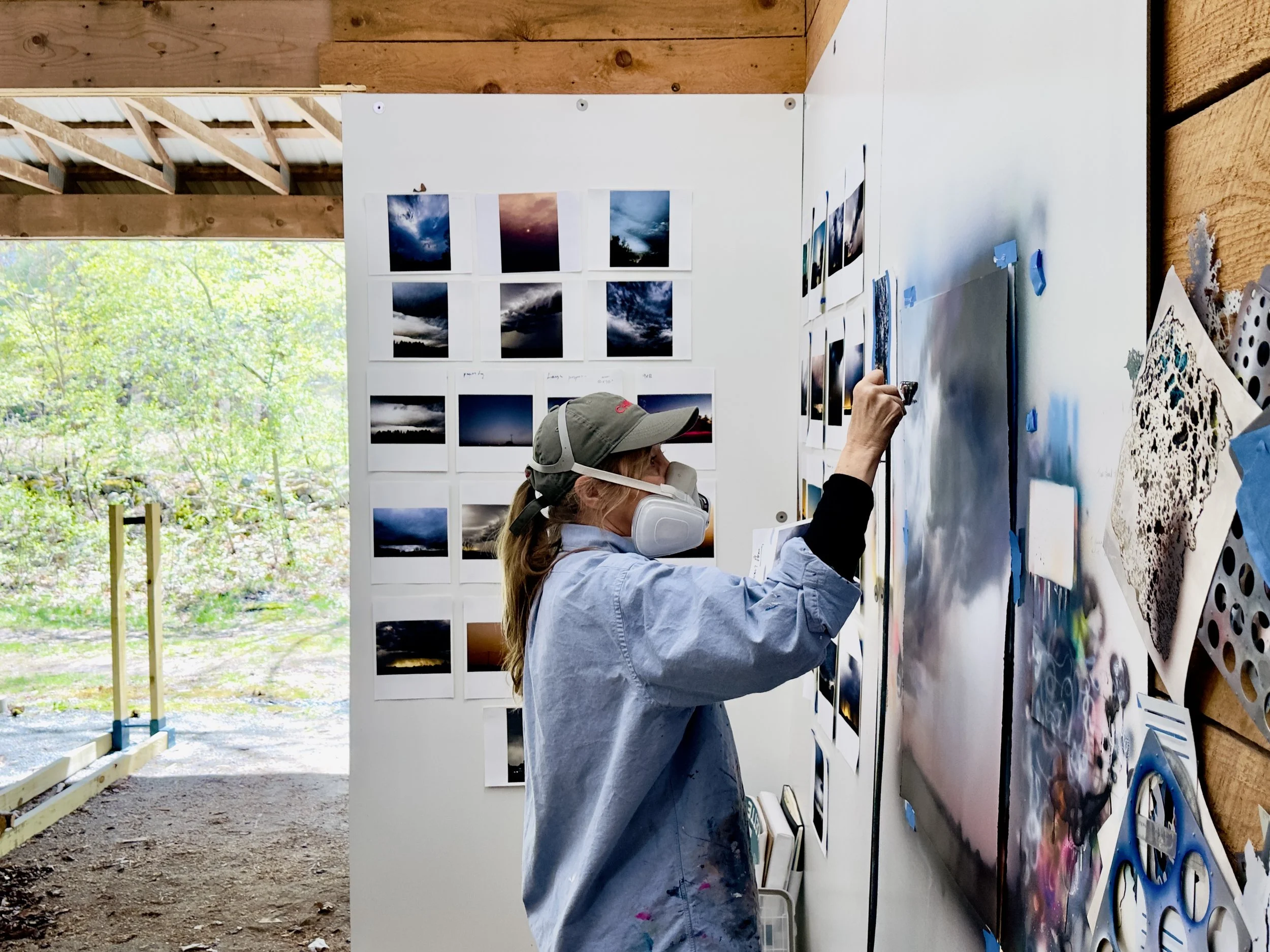
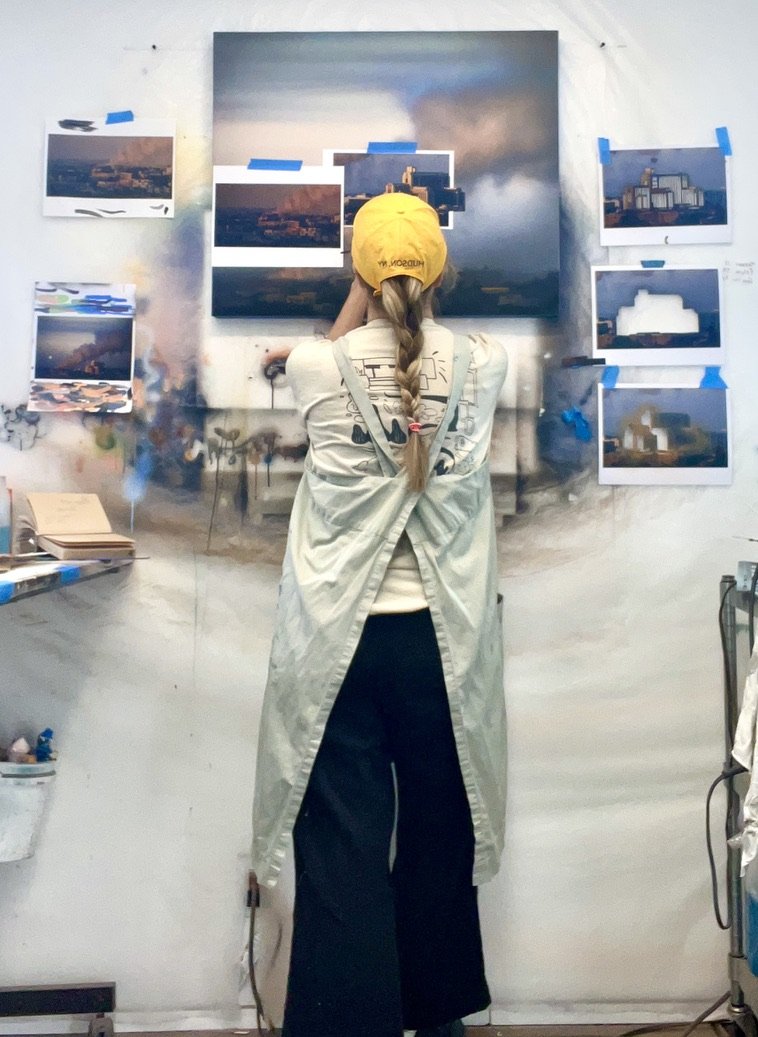
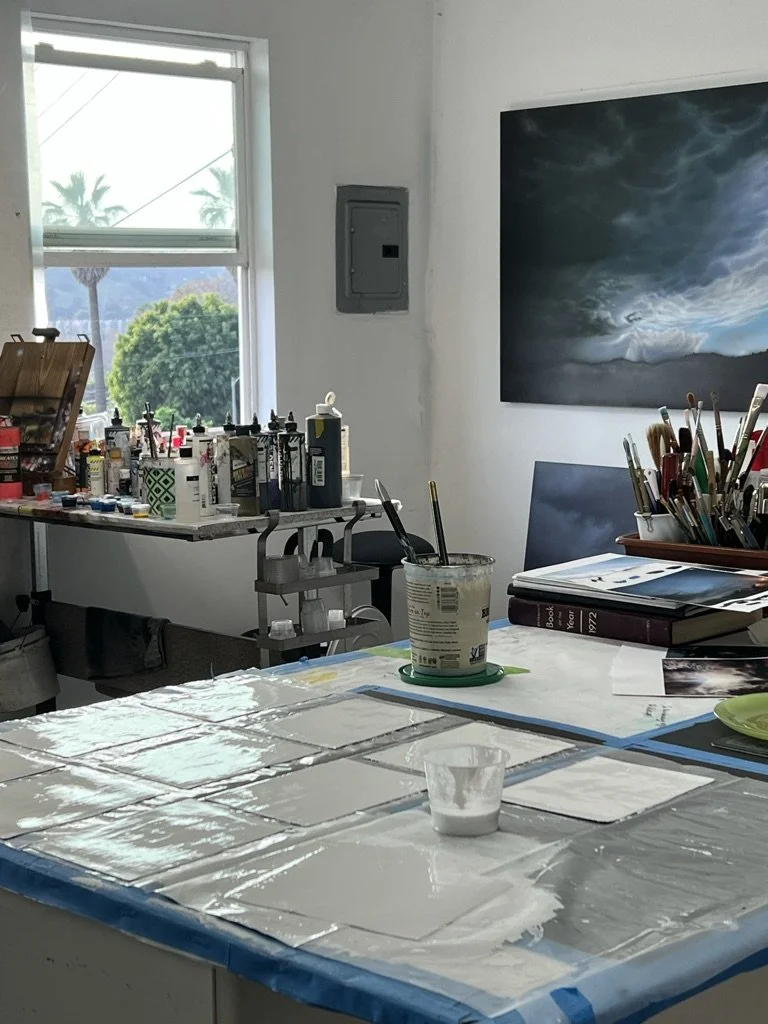
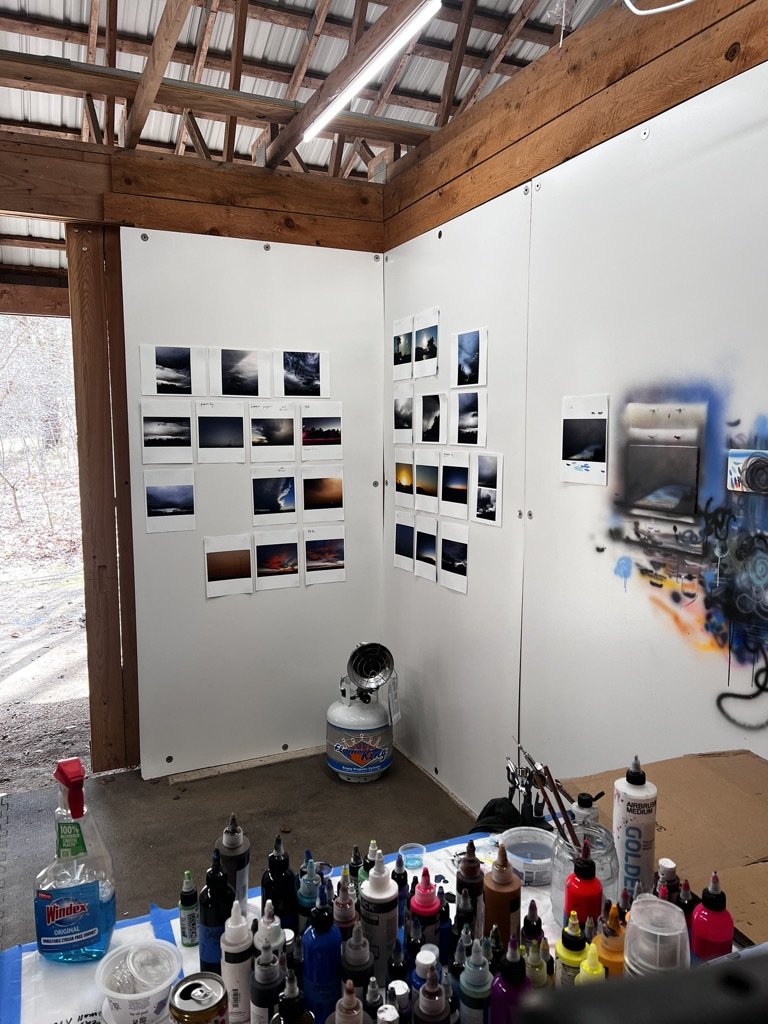
Samantha Fields’ work is about potentially cataclysmic moments at the intersection of political, personal, environmental, and societal structures. In this new series, Lay of the Land, Fields is addressing the powerful impact climate change is having on our lives through shifting weather patterns. Fields watched the darkening sky with horror from her home as the Los Angeles fires of 2025 tore through nearby communities - the catastrophic effect of changing rain patterns and increasing temperatures coupled with inadequate policy and response from local governing bodies. Fields is processing by unpacking, exploring, and spending time capturing these moments in all their power on her canvases.
On Technique and Process
Why airbrush?
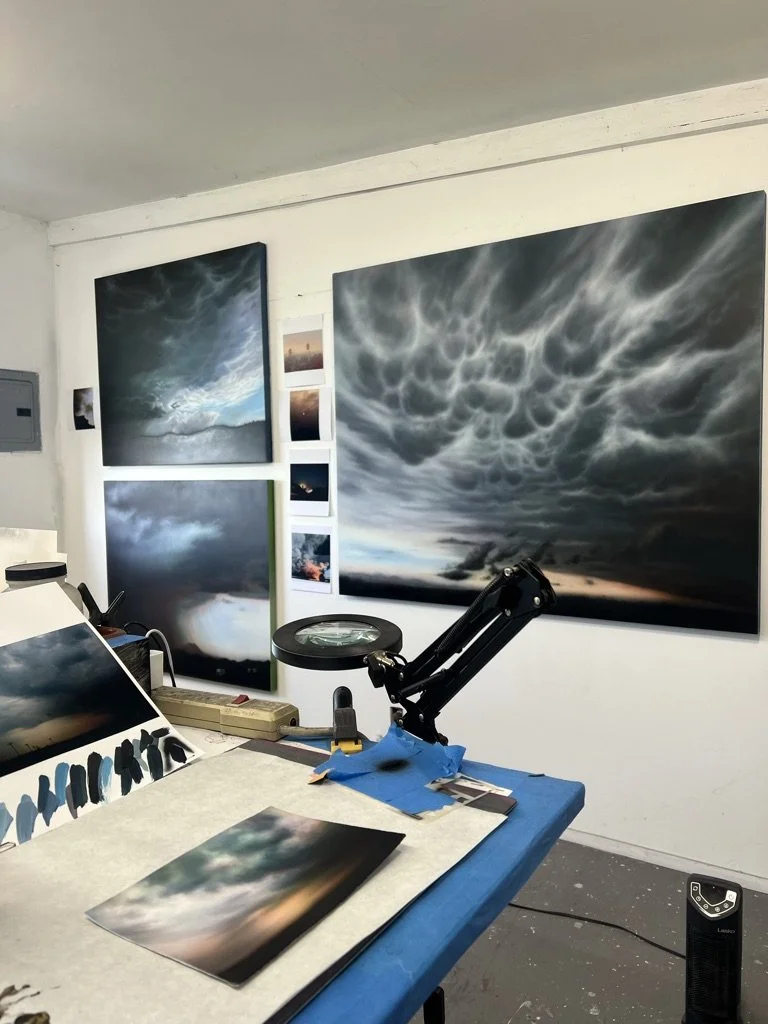
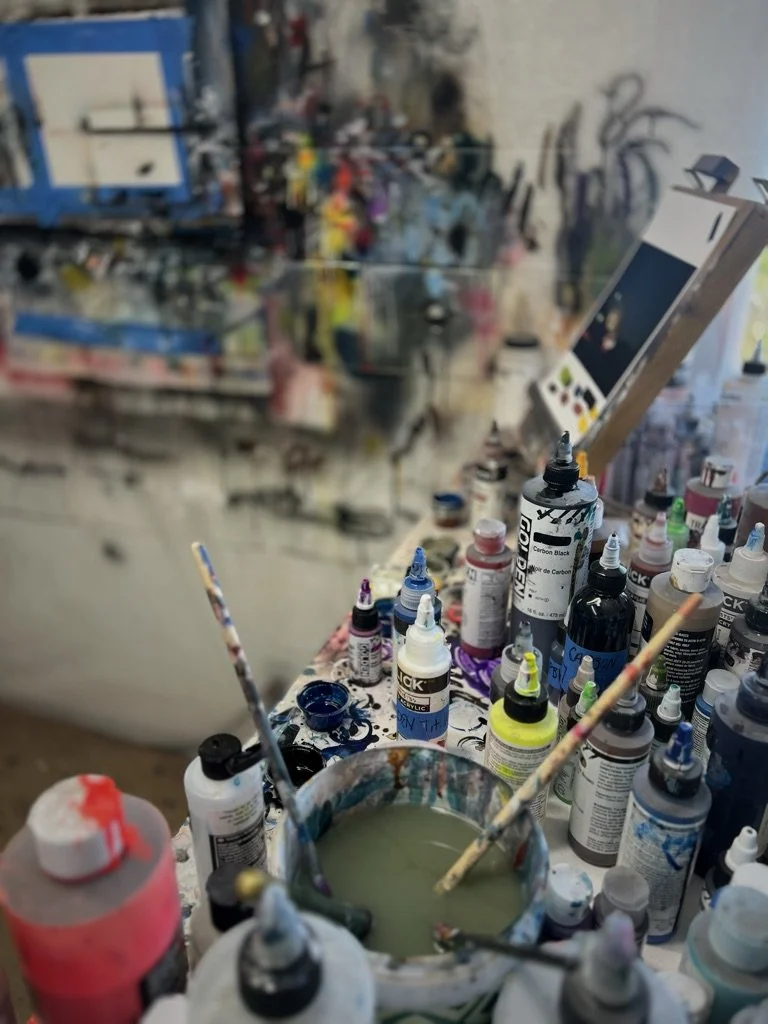
SF: I think it's a conceptually interesting idea to paint atmosphere WITH atmosphere. The airbrush is very finicky and takes a lot of patience and maintenance so I never recommend it! I have 7 brushes that I use for my work, all different sizes.
What is one thing people always ask you about your technique?
SF: Is this a photograph? and How many layers are there?
How did you get started with airbrush?
SF: I was painting in oil and making blended, graded backgrounds. It's so hot here in LA that the paint would dry too fast...I'm from back east, where paint stays wet for days! I decided to try the airbrush, initially, just for the backgrounds. Once I figured out how to use it, I realized that it was a better tool technically and conceptually for my work so I was all in!
How is prepping paint for airbrush unique?
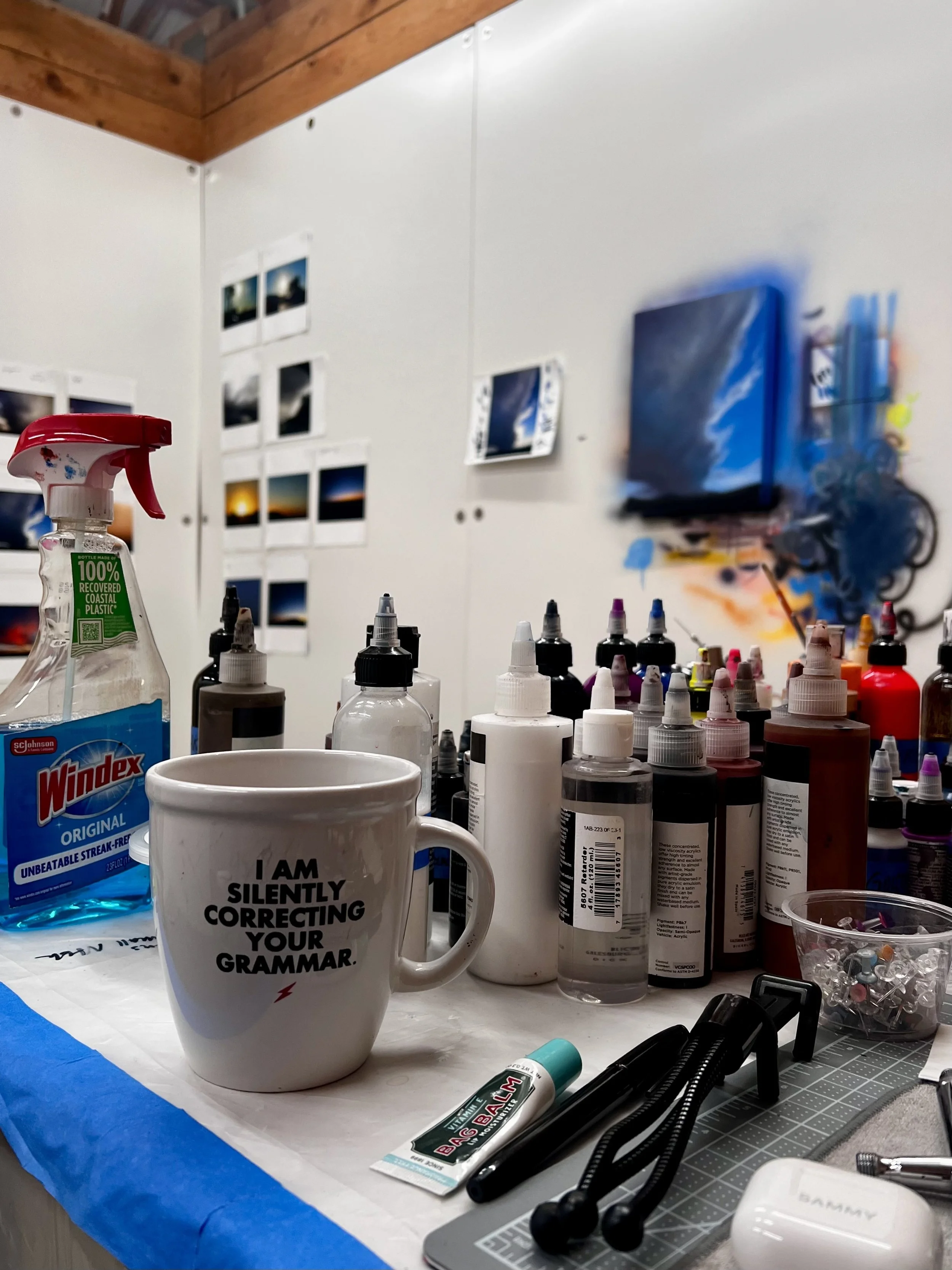
SF: Even though I use high flow acrylics, I have to add reducer and retarder to keep the needle clean and the paint flowing VERY SMOOTHLY....if the paint is too thick, the spray pattern is irregular, if it's too thin, it won't stick to the surface, so it's a precise mixture that has become almost second nature to me...I can usually just look at the paint and tell if it's the right consistency.
What is the most difficult part about airbrush?
SF: For me, taking it apart and cleaning it. I've been using an airbrush for about 20 years now, so the actual painting technique is as natural as writing my name now...but when I started, just getting the right air pressure and distance for the work was very challenging.
What is the most fun part of airbrush?
SF: I usually don't think of using the airbrush as a fun thing, rather, I find it deeply satisfying. I'd say that about painting in general as well...getting it right, especially that moment when a painting starts to hold together is the greatest feeling there is. Better than happiness, better than fun!
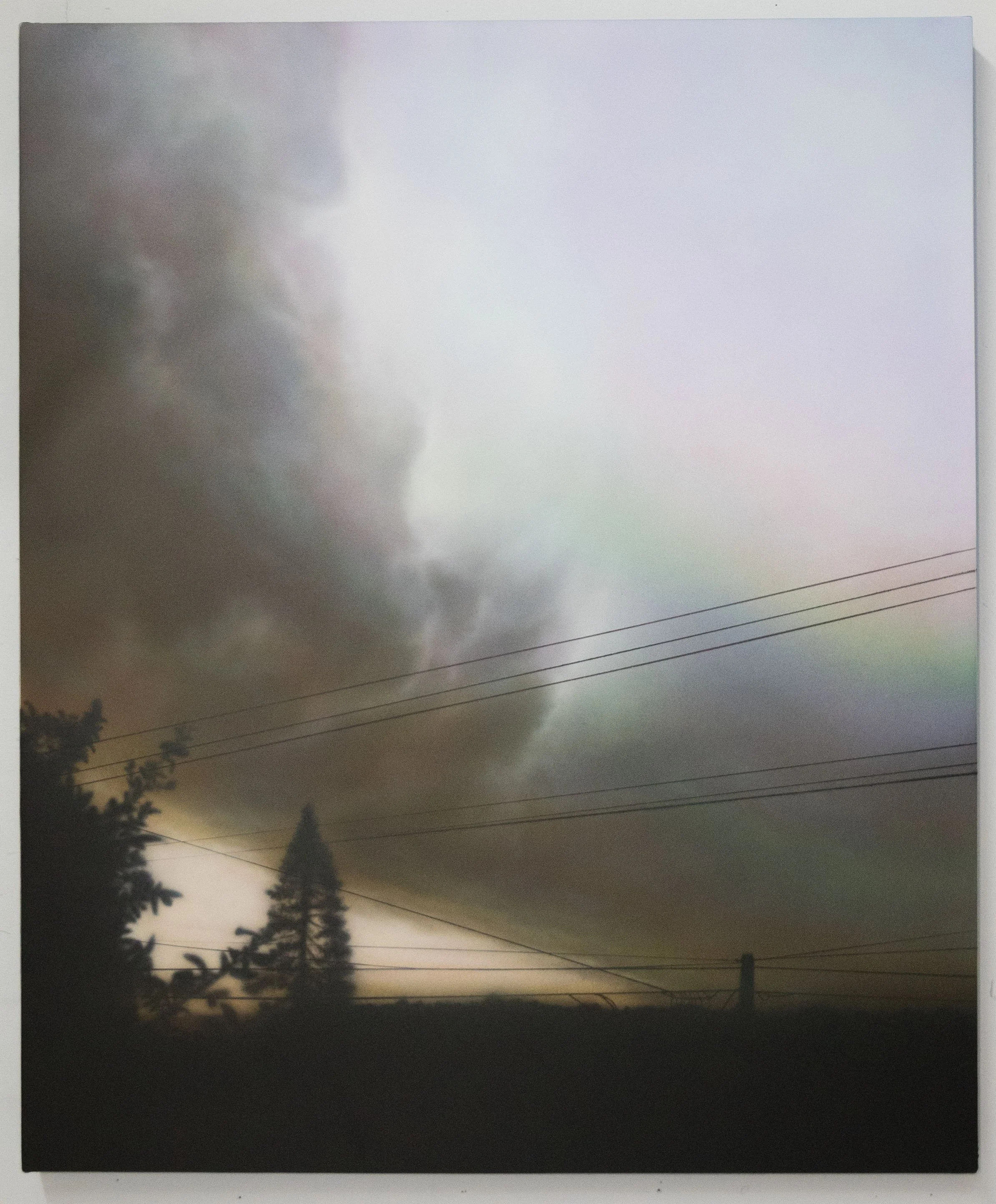
Bloom and Burn, 2026
acrylic on canvas, 29x24 in.
THE ARTIST OUT IN THE WORLD
Fields was the recipient of two residencies during the time she was working on this series: Alskär House Residency in the Hudson River Valley and Jen Tough Residency in New Mexico. Both locations are deeply connected to the history of American painting: the landscape painters of the 19th century Hudson River School and 20th century pioneering modernists Georgia O’Keeffe and Agnes Martin in New Mexico. The thread that connects all of these painters is a profound connection to the landscape and its power. For Fields, the time spent in these spaces inspired and evolved the work. Fields is viewing these catastrophic moments through the lens of wonder and a deep understanding that we will never control the elemental power of nature. These landscapes, like memory, are fragile and easily destroyed. The impermanence of all things is apparent.
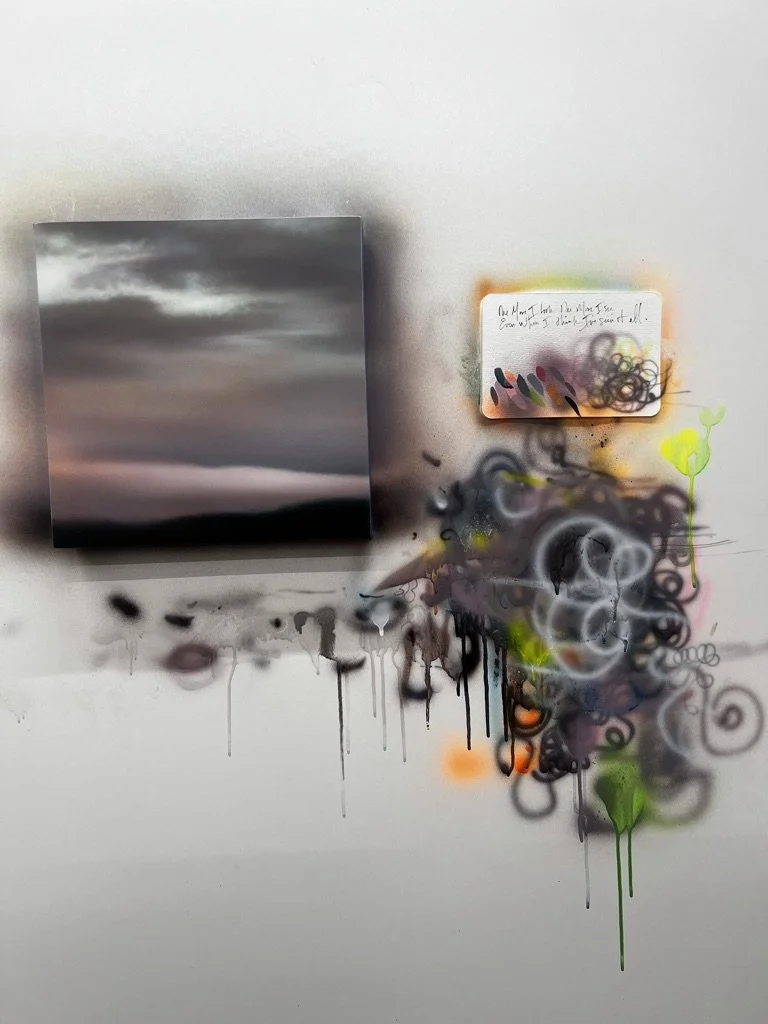
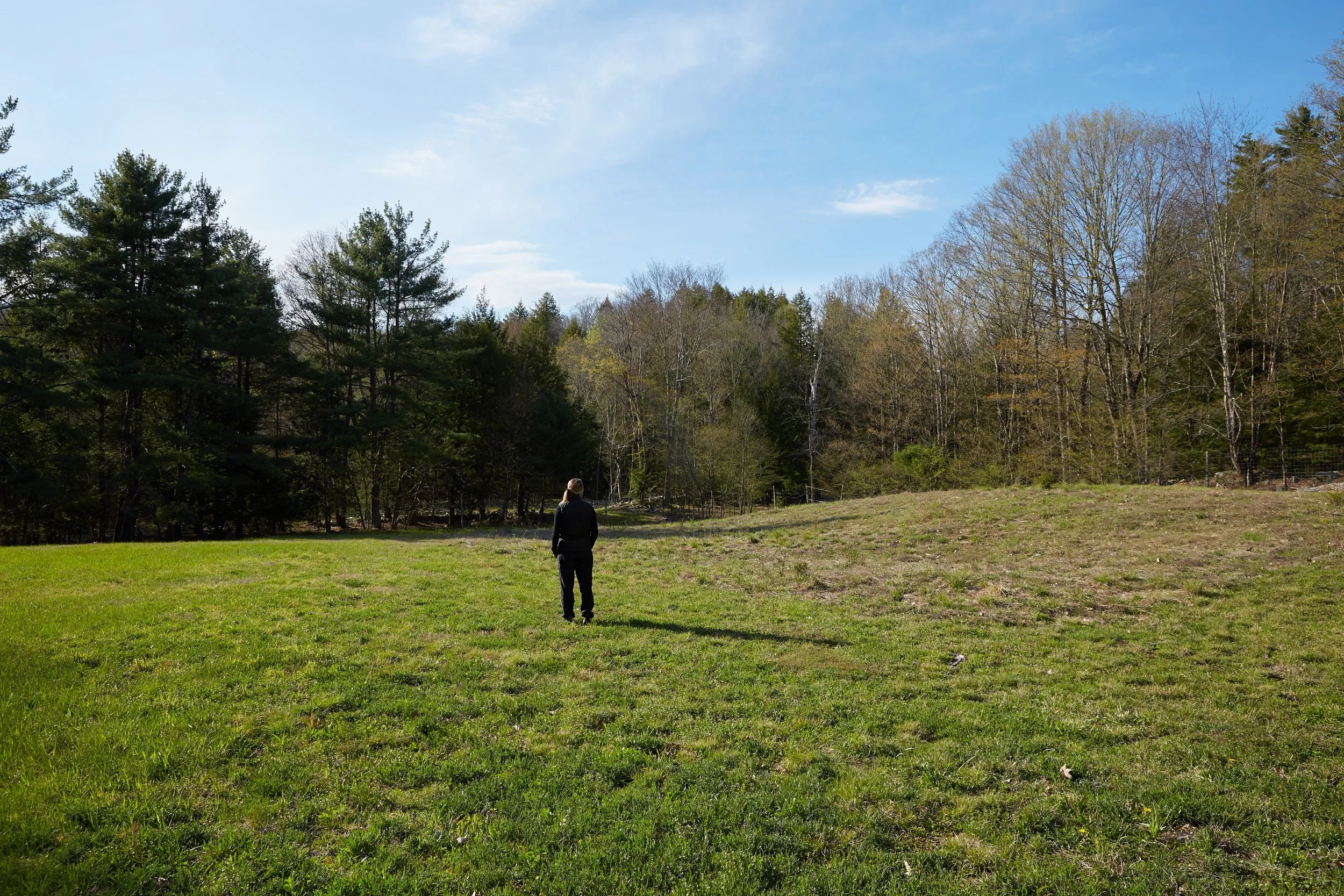
Alskär House Residency, East Nassau, New York
Favorite thing about the Alskär House Residency?
SF: The meadow! I painted it for the show. I'd take my breaks out in the middle, and just watch the sky. It was so peaceful and ever-changing. The meadow was my framing device during the residency.
INSPIRATION AND MENTORS
Who do you count as a mentor?
SF: Beverly Fishman, who was my teacher Cranbrook, where I earned my MFA. I also worked as her TA and studio assistant and I learned so much for seeing how she manages her professional life. Since then, we have shown together and taught together and I count her as family. Here on the west coast, Joe Lewis was my mentor...he hired me at and taught me how to teach, and how to navigate Los Angeles. He'd actually take me out to the galleries to meet people because I didn't know a soul here! He took a huge chance on a young artist, and I am forever grateful to him.
Best advice for young artists?
SF: Engage with your work every day, even if that just means looking at it and thinking about it. You have to make your studio practice as expensive as possible. I even consider my morning walk to be part of my studio practice because I have a chance to observe the world quietly with "artists eyes". Also: Know art history and contemporary art, knowing the field is pretty essential to finding your place within it.
Where do you look for inspiration?
SF: I go outside, I travel....I love to be on the road. I take my camera everywhere since my work originates with my photographs. I read voraciously, fiction and no fiction....I love movies and stories. I also write a lot, I take notes on everything, my thoughts, what I'm reading, the news, all of that feeds into the work, which is really about the world we live in.
A QUOTE AND A MANTRA
A quote that you find inspiring is:
"The landscapes we represent are in effect texts in which our feelings and beliefs about nature, and hence about ourselves as inside and outside nature, are inscribed.”
-Arthur Danto, Encounters and Reflections: Art in the Historical Present
A mantra to live by is:
KEEP PAINTING UNTIL IT'S GOOD. I wrote that in my sketchbook over 20 years ago and I still have it hanging in my studio.